What a Website Conversion Audit Actually Covers, and What It Should Hand You
A useful audit is not a list of opinions about your homepage. Here is what it should examine and what you should own when it ends.
- Author -
- Veoc Tech Strategy
- Published -
Most teams commission a website audit when a number stops moving: demo requests flatten, trial signups stall, paid traffic gets more expensive without converting any better. The audit that helps is the one that explains why, in order of impact, and leaves you with work you can schedule on Monday.
An audit earns its fee when it changes what your team builds next. If nothing on the roadmap moves, you bought a document, not a diagnosis.
An Audit Is a Diagnosis, Not a Redesign Brief
A conversion audit answers one question: where does a qualified visitor lose the thread between arriving and taking the next step? That is a narrower job than reviewing the brand or critiquing the visual design, and it is more useful. At Veoc Tech we start every audit by writing down the one or two actions the site exists to produce, then trace each path that leads to them. Everything examined afterward is judged by whether it helps or hinders those paths.
The Three Layers Worth Examining
A thorough audit looks at the site from three angles, because problems in one are often misread as problems in another:
- Message and Structure: Whether each page says who the product is for, what it does and why it is different, in the order a buyer needs to hear it.
- Interface and Flow: Navigation, forms, calls to action, pricing presentation and every step between first click and submitted form.
- Technical Foundation: Load performance, mobile rendering, accessibility, analytics accuracy and how search and answer engines read the pages.
Evidence Before Opinion
The weakest audits are heuristic reviews dressed up as research. A strong one pairs expert review with behavioral evidence: analytics funnels, session recordings, form analytics, search query data and, where possible, a handful of conversations with recent buyers and recent non-buyers. When evidence and expert judgment disagree, the audit should say so rather than pick a side quietly.
How a Finding Should Be Built:
- Observation: What is happening, on which page, for which segment of traffic.
- Cause: The most likely reason, with the evidence that supports it and the confidence level.
- Fix: A specific change, sized by effort, with the metric it is expected to move.
What You Should Be Holding at the End
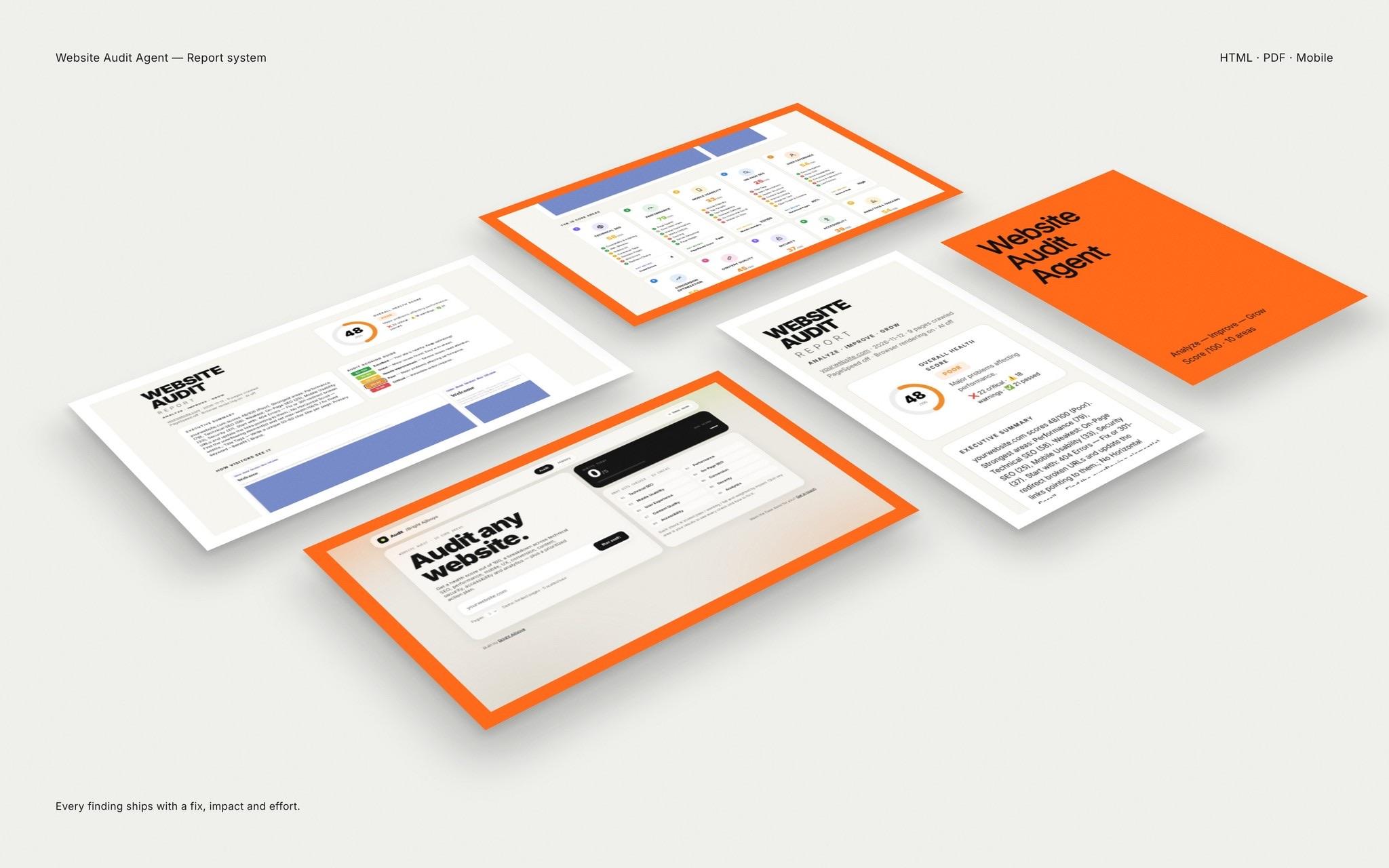
The deliverable is a prioritized backlog, not a slide deck. Each item should be ranked by expected impact against effort, and written clearly enough that a designer or engineer who never attended the audit could pick it up. You should also receive a corrected measurement plan, because a surprising number of audits discover that the conversion events themselves are tracked wrongly, which makes every earlier decision suspect.
Signs the Audit Was Shallow
Be wary of findings that could apply to any website: “simplify the navigation,” “add social proof,” “make the call to action more prominent.” Real findings name a page, a segment and a cause. Be equally wary of an audit with forty items at equal weight. Prioritization is the hard part of the work, and an unranked list hands that work back to you.
Conclusion: Buy the Backlog, Not the Report
Before you commission an audit, ask what you will receive, who will be able to act on it and how the findings will be ranked. If the answers are a PDF, nobody in particular and alphabetically, keep looking. The right audit shortens your next quarter of website work because it tells you what to skip.
At Veoc Tech we treat the audit as the first sprint of the engagement rather than a separate product. The people who find the problems are the people who will design and ship the fixes, which keeps findings honest about effort and keeps the backlog from gathering dust. Whoever you work with, hold them to the same standard: every finding should be something you can build, measure and learn from.