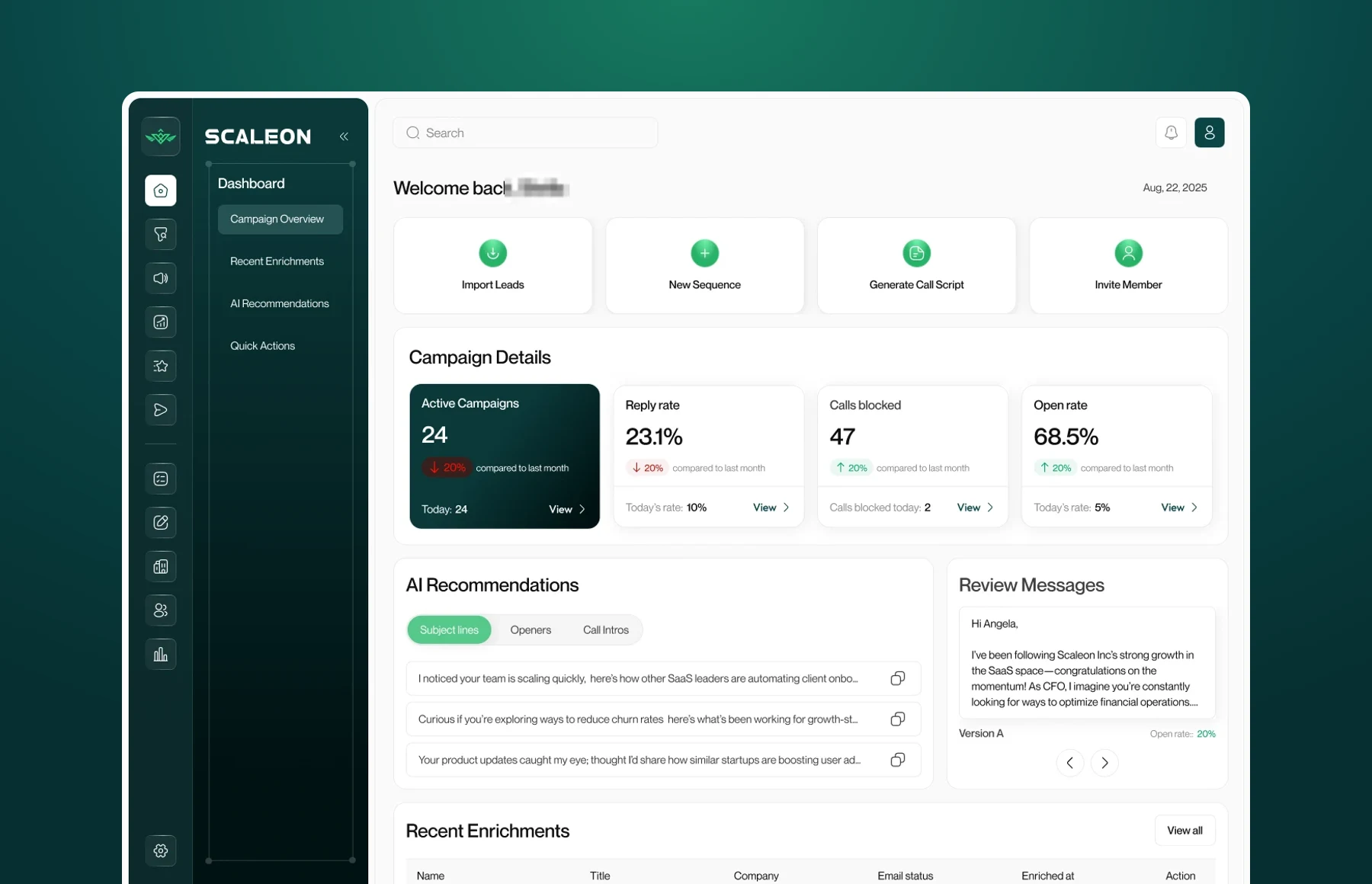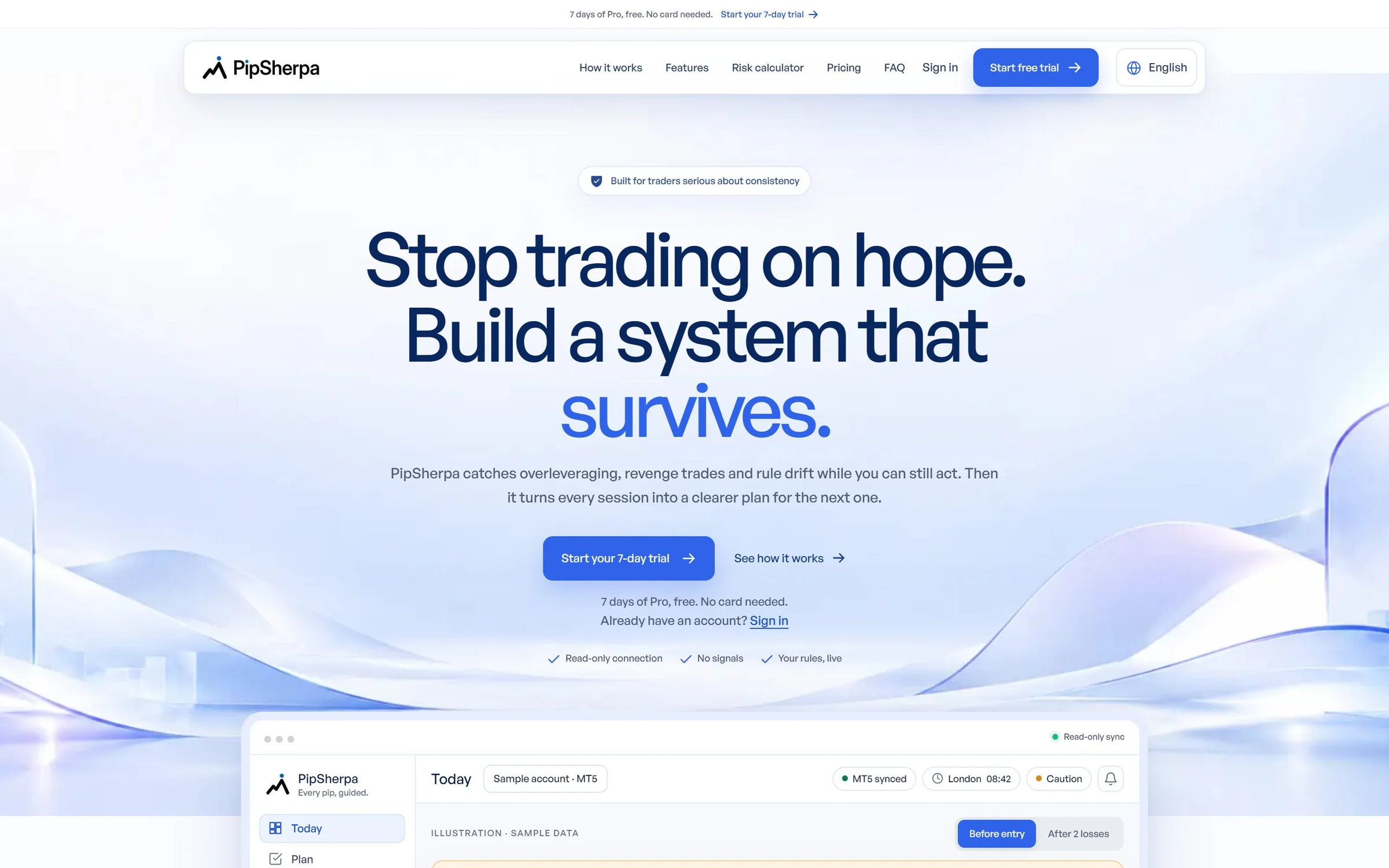
Mobile App Design
Afritana Marketplace App
A trust-first marketplace connecting verified African sellers with diaspora buyers worldwide.
- Industry
- Cross-border Marketplace
- Platform
- Mobile App + Admin
- Scope
- Product Strategy, UI/UX
- Audience
- African Sellers, Diaspora Buyers
The Scope
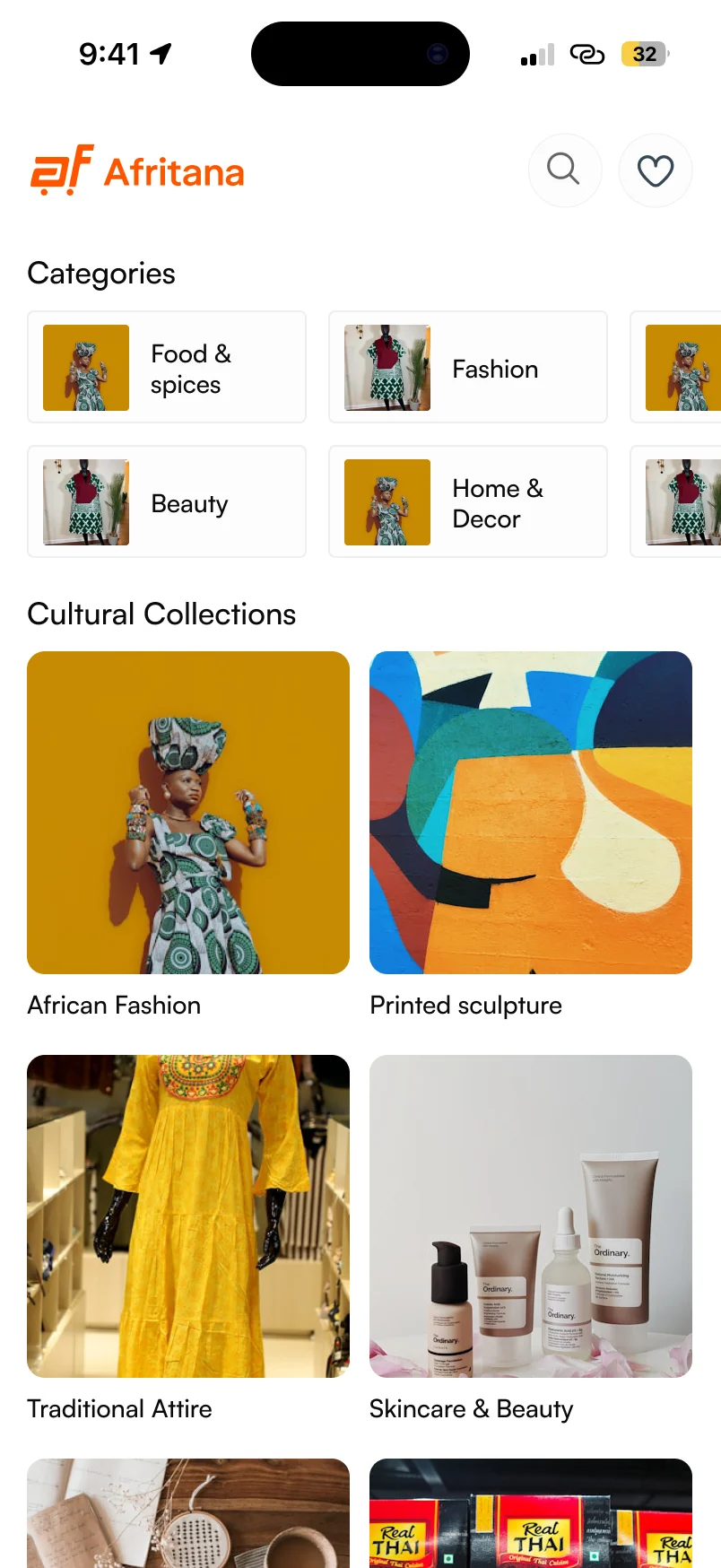
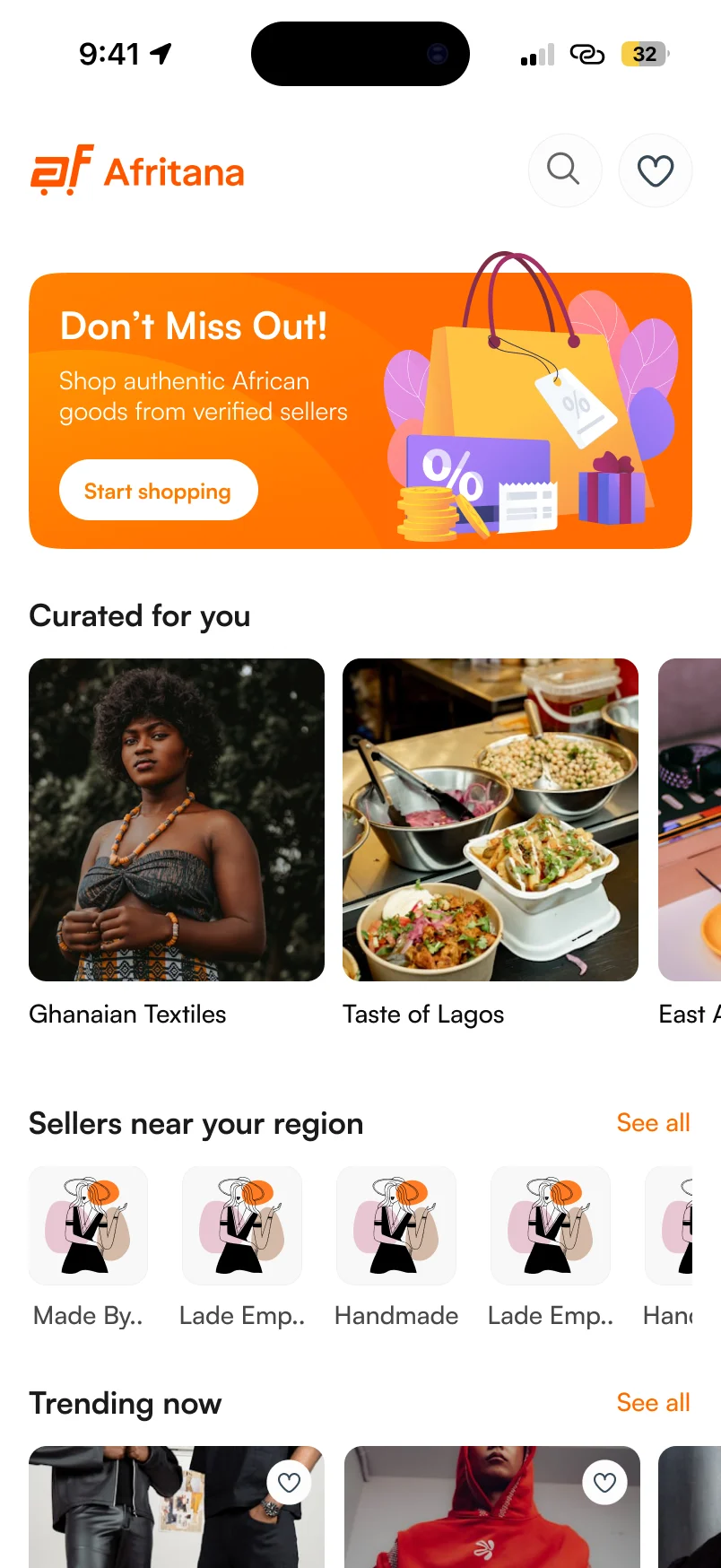
Afritana connects verified African sellers with diaspora buyers around the world. We designed the buyer app, the seller app and the admin side as one system: 90+ mobile screens across eight core flows, built so neither side has to take a stranger’s word for it.
The Problem
Cross-border buying asks for two leaps of faith.
The buyer pays before seeing the product. The seller ships before knowing the money is safe. Marketplaces usually bury that risk in policy pages. We made it the core of the interface, so trust is visible at every decision.
/ 01 / Process
From marketplace risk to a full product system.
We started with the trust problem, not the catalog. Each stage narrowed what the product had to prove to a buyer or seller before asking them to act.
- 1
Discovery
- Marketplace goals
- Buyer and seller mapping
- Trust and risk audit
- 2
UX Design
- User personas
- App flows
- Escrow and dispute logic
- 3
UI Design
- Brand and color
- Component system
- Buyer and seller screens
- 4
Handoff
- Edge and empty states
- Admin side
- Developer-ready file
/ 02 / User Research
Two people, one transaction, opposite fears.
We framed the product around the two sides of every order. These working personas capture what each needs to believe before they pay or ship.
Working assumptions, not interview findings
The Diaspora Buyer
Lives abroad, shops for home
Wants authentic food, fashion and gifts from home, but has been let down by unverified sellers and informal orders over chat.
Goals
- Find genuine products from a specific country
- Know when an order will arrive
- Get money back if something goes wrong
Frictions
- No way to judge a seller from far away
- Paying upfront with no protection
- Unclear shipping costs and timelines
The African Seller
Runs a small business from a phone
Makes or sources quality goods and wants international customers, but has limited tools, reach and confidence in getting paid.
Goals
- Reach buyers outside their local market
- Get paid reliably for what they ship
- Build a reputation that brings repeat orders
Frictions
- Unfair disputes with no way to respond
- Complicated listing and payout tools
- Hard to stand out from informal sellers
Buyers fear paying a stranger.
Escrow status appears at checkout and on every order.
Sellers fear not being paid.
Earnings show what is held, pending and paid out.
Both sides fear unfair disputes.
Disputes collect evidence from both sides before a decision.
/ 03 / App Flow
Two journeys that meet at escrow.
One role choice splits the app into tailored paths for buying and selling. Both converge on the same protected transaction, so every order ends in a clear, accountable outcome.
- Splash
- Choose role
- Sign up or browse as guest
Buyer
- Set country and interests
- Discover collections
- View product and seller
- Cart and checkout
- Track order
Seller
- Submit ID and address
- Verification review
- Create listing
- Receive and fulfill order
- Grow rank and referrals
Payment held in escrow
Funds stay protected until the buyer confirms delivery.
Delivered
Buyer confirms, escrow releases to the seller, and a review follows.
Disputed
Both sides submit evidence for the case to be reviewed.
Resolved
Full refund, partial refund or release to the seller.
/ 04 / Logo / App icon
A mark that carries the cart.
The “af” monogram folds a shopping cart into the letterforms. Set in white on a single saturated orange, it stays recognizable at app-icon size and warm enough for a brand built on culture rather than discounts.

/ 05 / Product Strategy
Four decisions shaped every screen.
- 1
Verify before selling
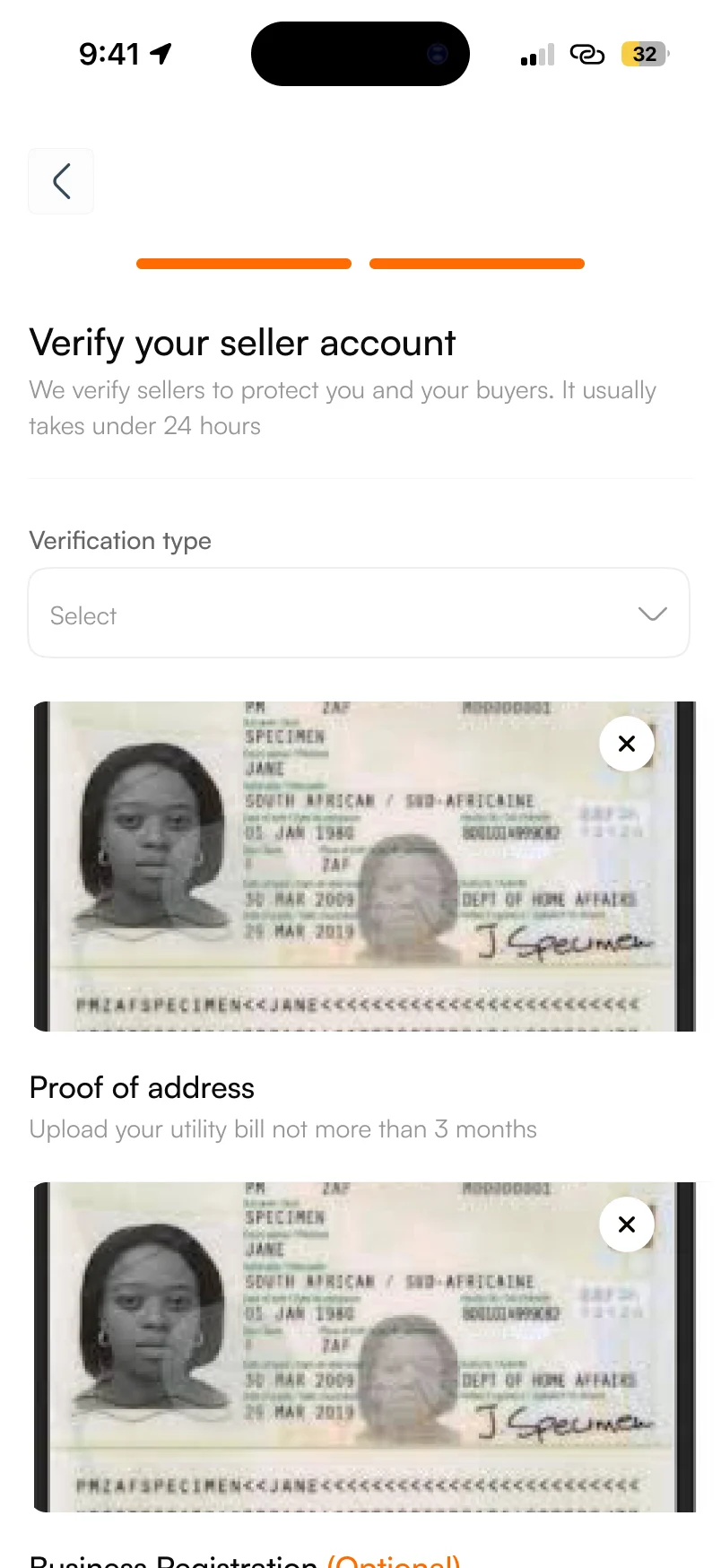
Sellers submit ID and proof of address before they can publish or get paid, so the “verified” badge means something.
- 2
Escrow by default
Payment is held until delivery is confirmed. The status appears at checkout, on the order and in the seller’s earnings.
- 3
Shop by culture
Discovery runs on collections and regions, because diaspora buyers often search for home before they search for a product.
- 4
Reward good behavior
Seller ranks and referrals turn delivery speed, low disputes and word of mouth into visibility and rewards.
/ 06 / Colors / Palette
One signal color.
Orange is reserved for action and status. Everything else stays neutral, so product photography and textile patterns carry the color on screen.
- Orange#FF6B01
- Orange Light#FFF0E6
- Black 900#0B0B0B
- Black 500#191A19
- Black 300#656665
- Ash#F8F8F8
- Line#E8E8E8
/ 07 / Typography / Fonts
Satoshi
Regular / Medium / Bold
A geometric sans that stays friendly at display sizes and legible at 12 px, where order details and escrow notes live.

/ 08 / Screens / Onboarding
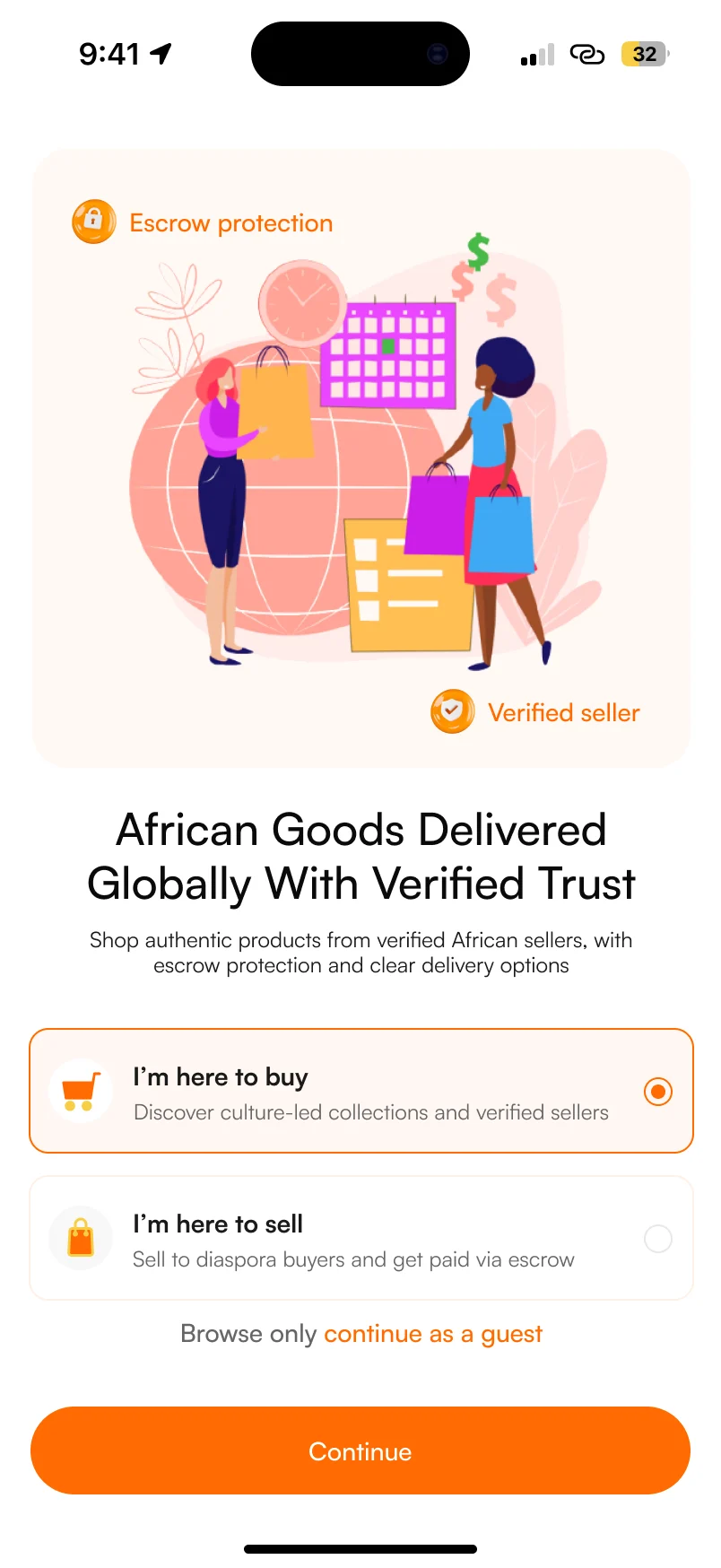
Onboarding
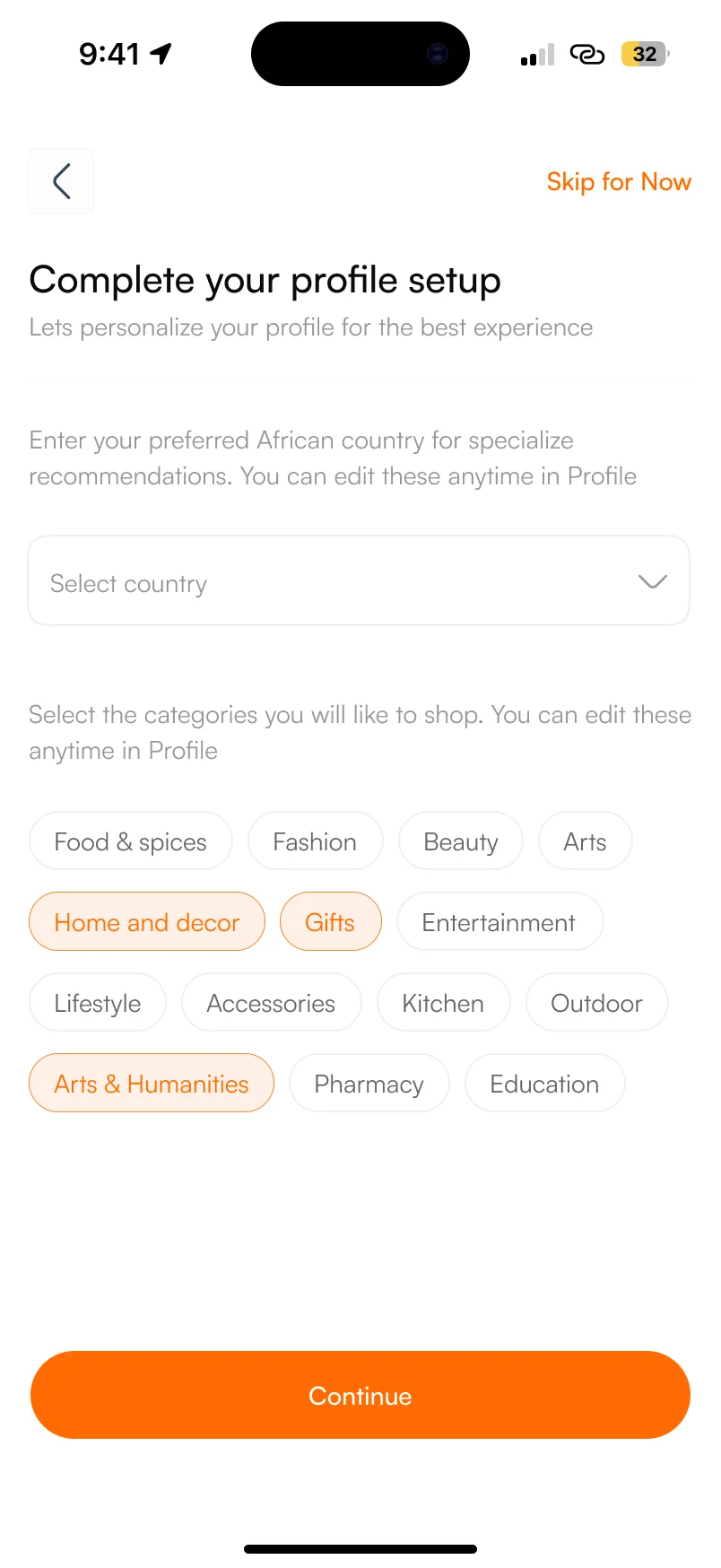
The first question is the only one that matters: are you here to buy or to sell? That choice splits the product into two tailored journeys. Guests can browse first, and buyers set a home country and interests to personalize the feed from day one.

/ 09 / Home / Discovery / Storefront
Discovery
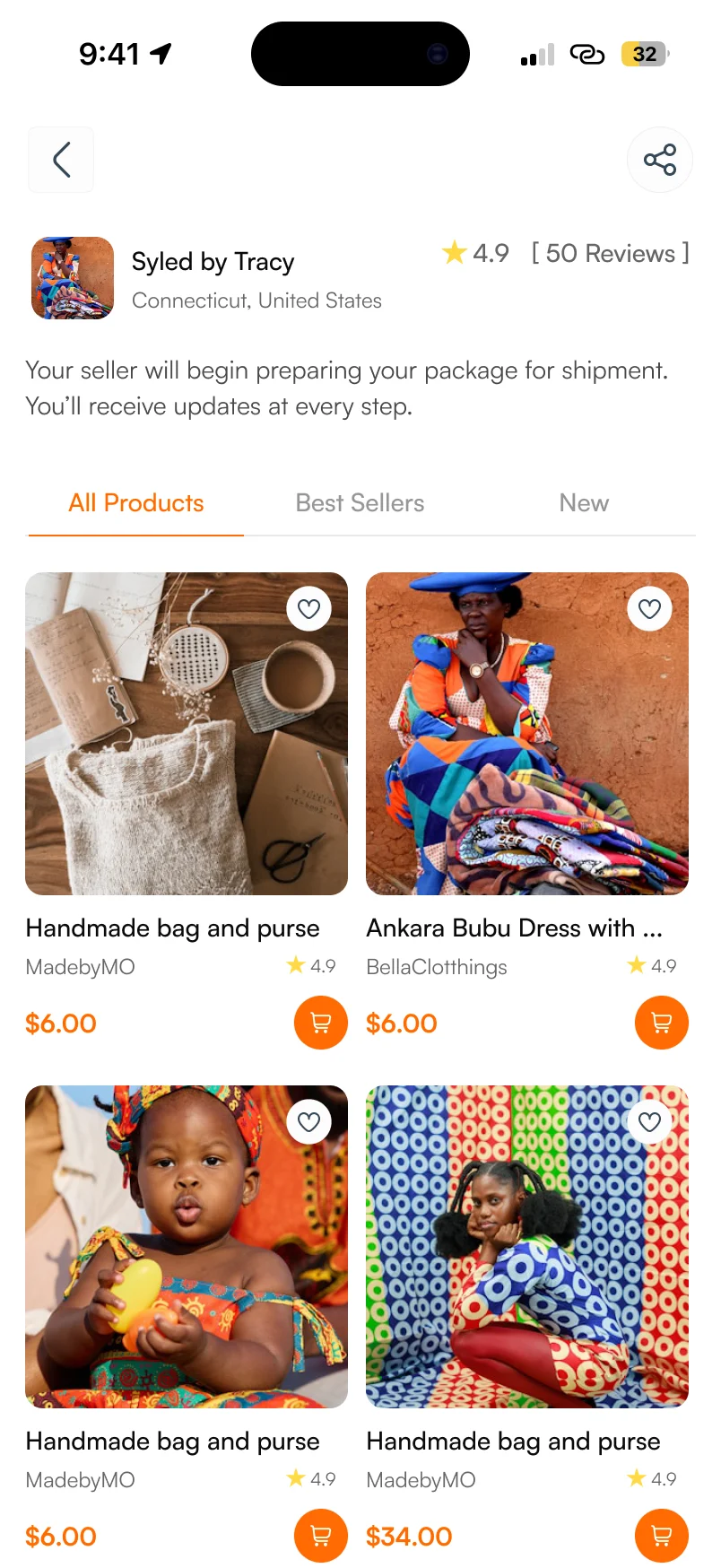
Home leads with curated collections and sellers near the buyer’s chosen region. Cultural collections such as Ghanaian textiles and the taste of Lagos make browsing feel like a market, and every storefront keeps the seller’s rating and reviews in view.
/ 10 / Product / Checkout / Confirmation
Checkout
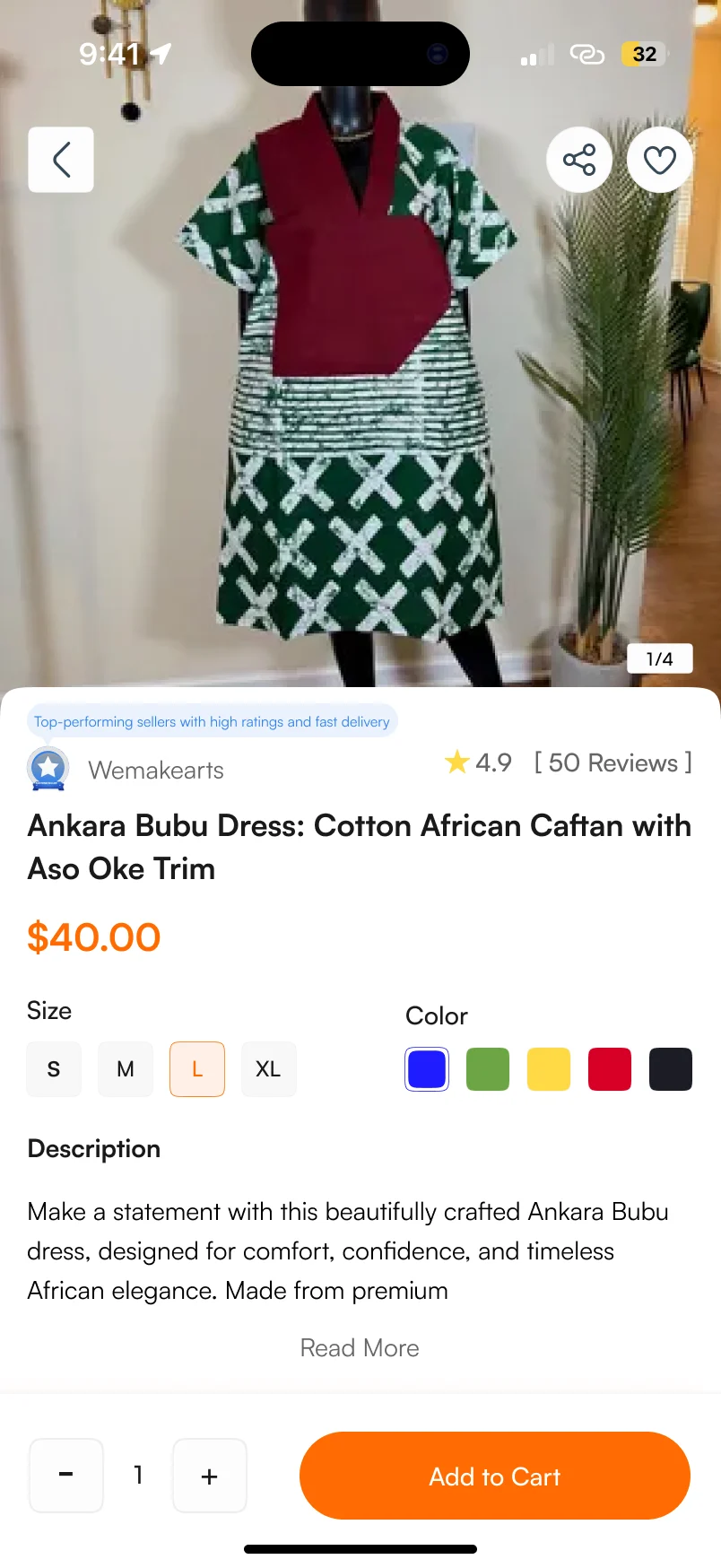
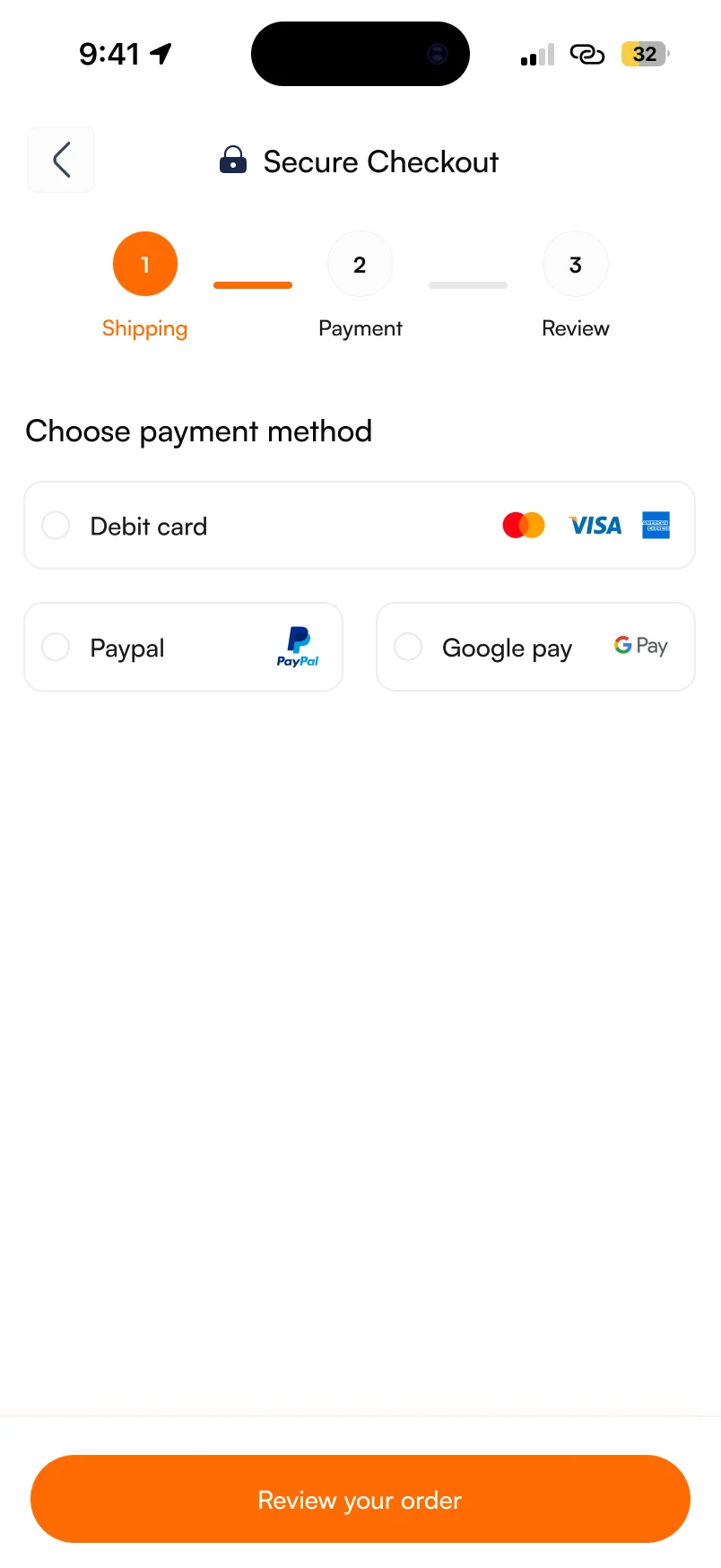
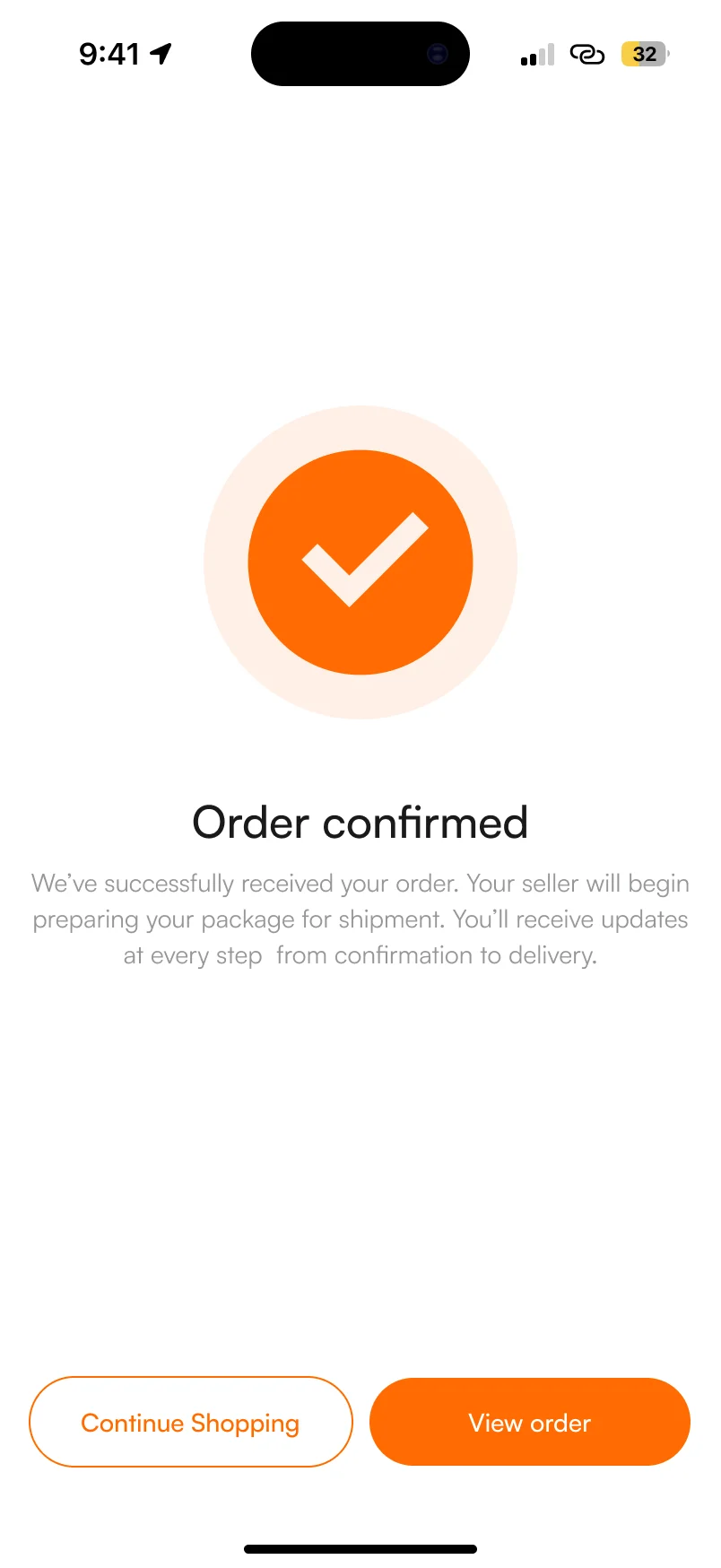
The product page puts imagery, seller rating and variants ahead of everything else. Checkout is three clear steps with familiar payment options, and the confirmation tells buyers exactly what happens next.
/ 11 / Orders / Escrow / Disputes
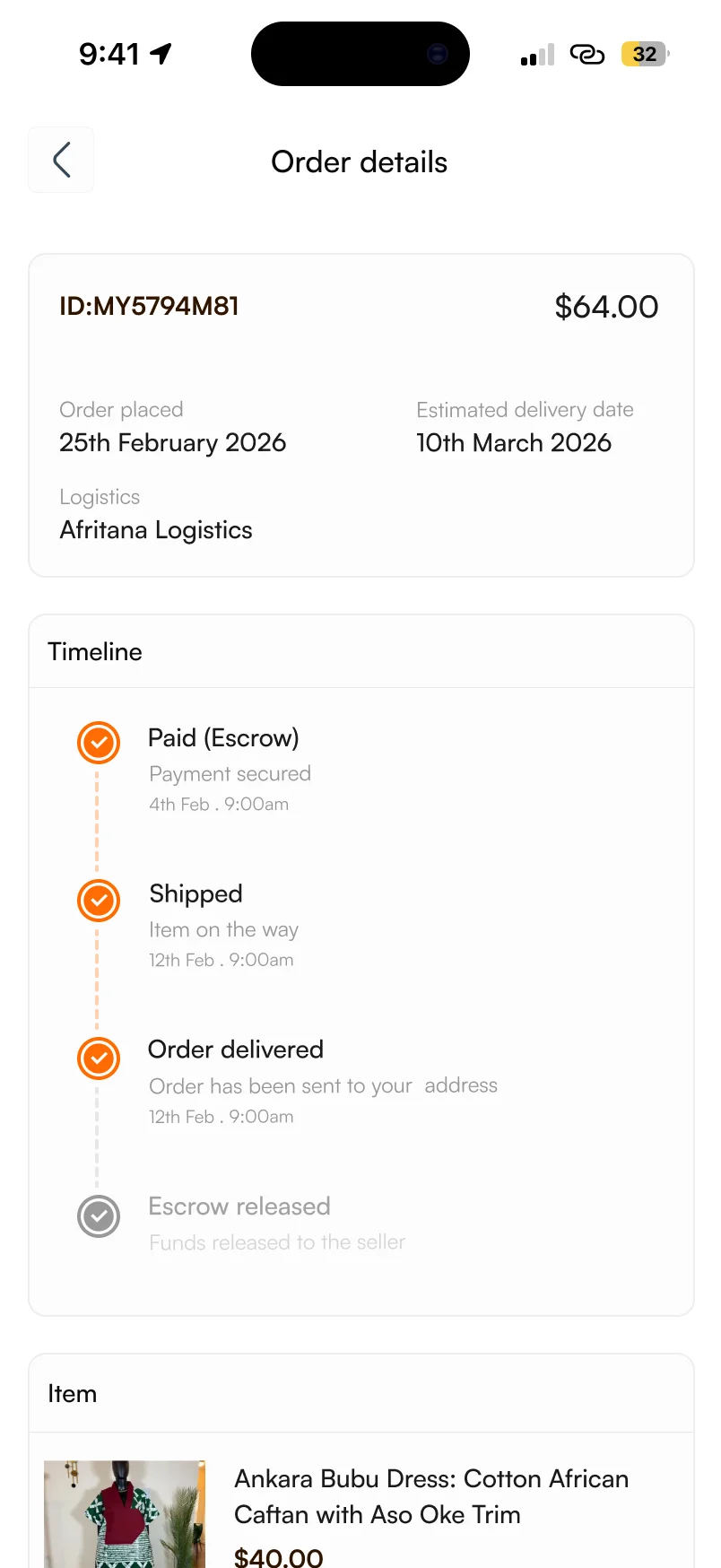
Escrow you can see
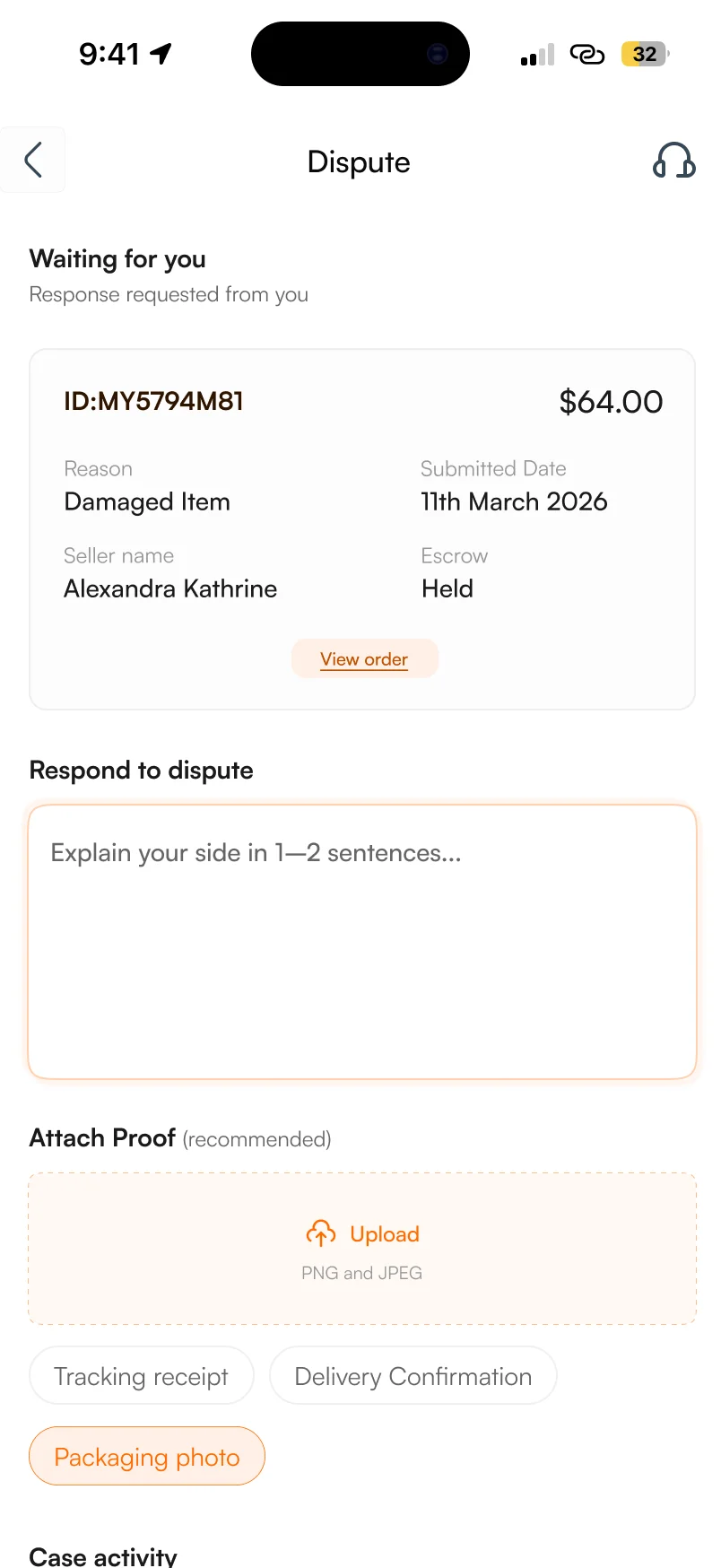
Every order shows a timeline from payment to release, so buyers always know where their money is. When something goes wrong, a structured dispute collects evidence from both sides and ends in a clear resolution: refund, partial refund or release to the seller.
- 1Paid to escrow
- 2Shipped
- 3Delivered
- 4Escrow released
/ 12 / Seller / Verification / Listings
Seller tools
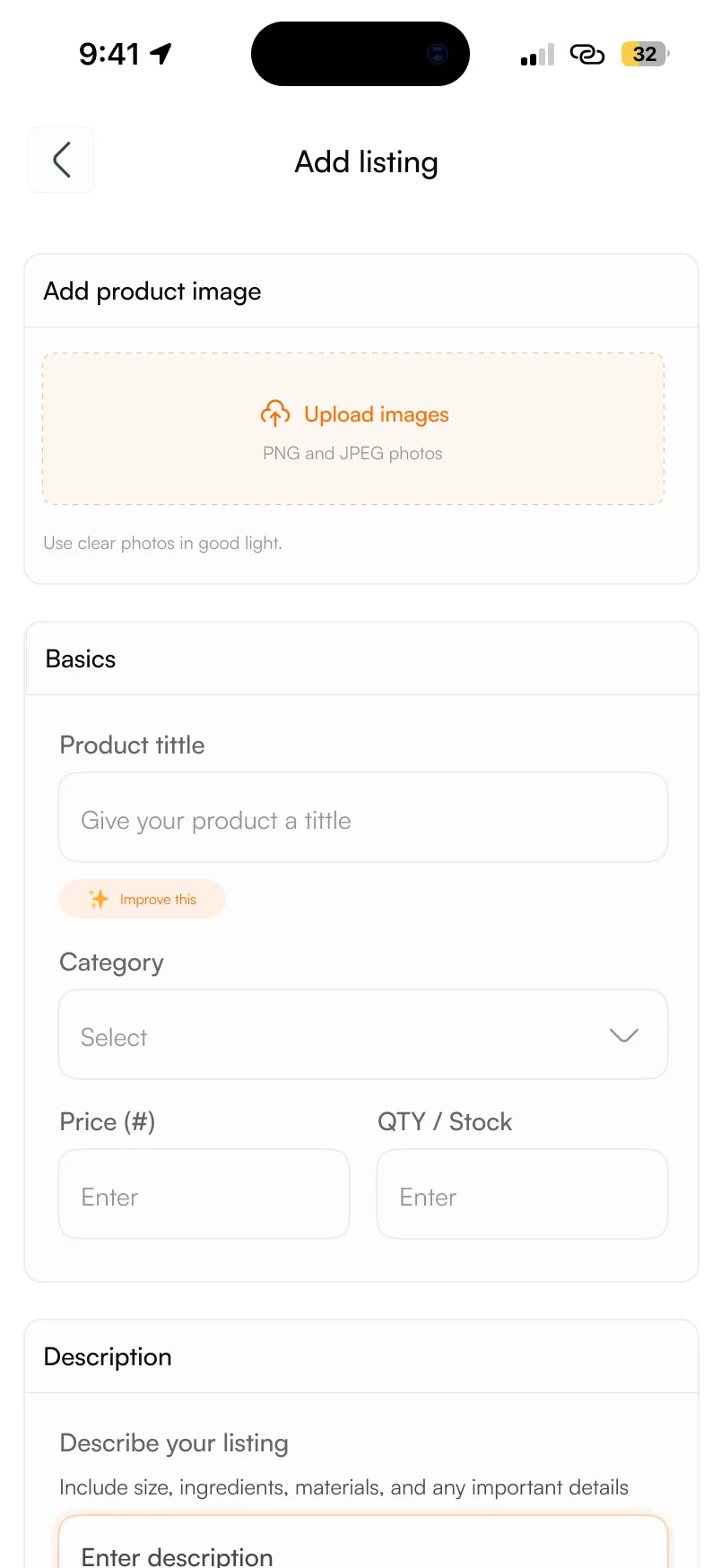
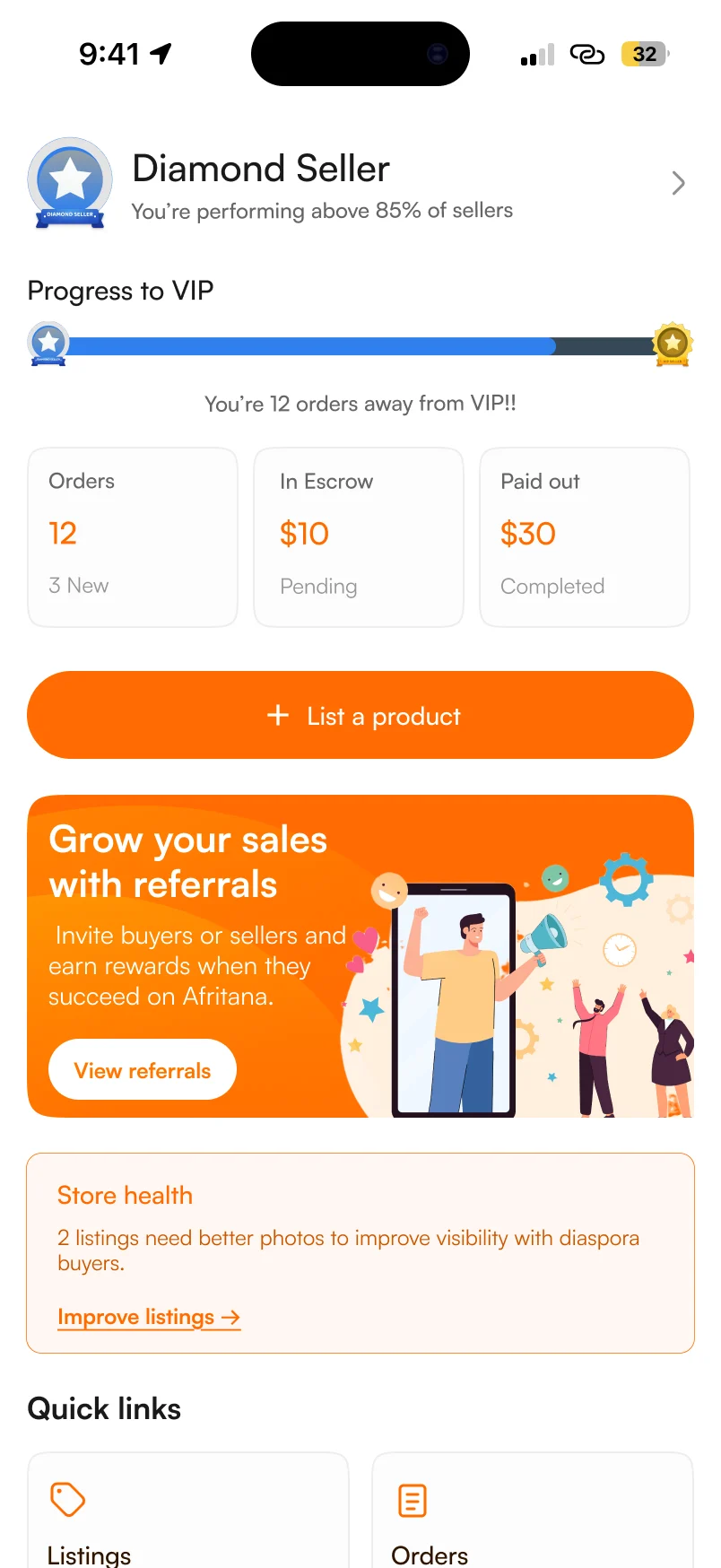
Many sellers run their business entirely from a phone. Verification is a short guided upload, listings are one form, and the dashboard answers three questions at a glance: what is in escrow, what has been paid and what needs attention.
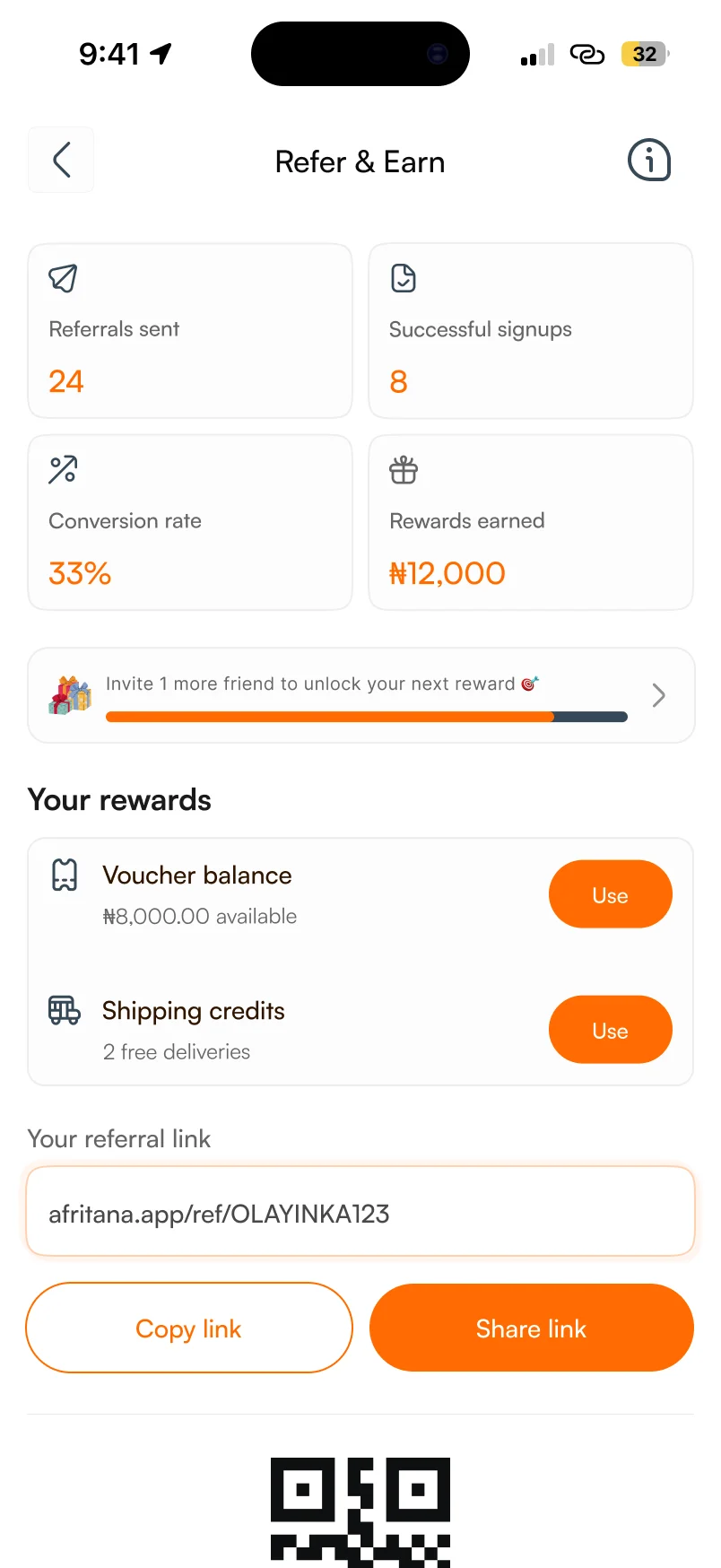
/ 13 / Rank / Referrals / Growth
Growth built in
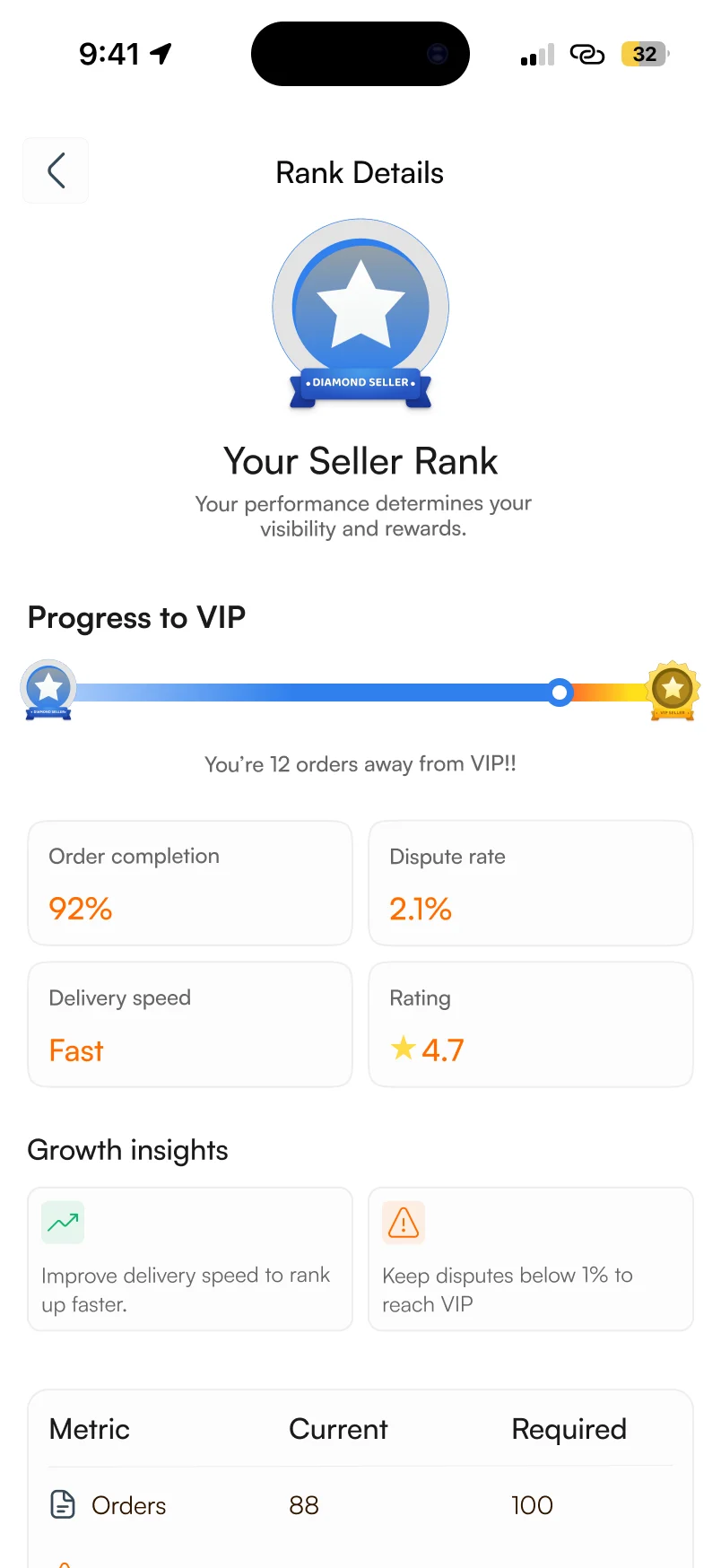
Seller ranks show exactly what it takes to reach the next tier: order completion, dispute rate, delivery speed and rating. Referrals give buyers and sellers a reason to bring the next person in, turning trust into the marketplace’s acquisition channel.
About this section
This is a strategic retrospective. It explains the reasoning a senior product team would apply to this brief, read from the shipped design. It does not report research findings or measured results.
Strategic retrospective
How a world-class team would approach this brief
What this reading is based on
- The Afritana buyer and seller screens shown in this case study
- The escrow, dispute, verification and seller rank flows in the product design
- Established guidance on marketplace trust and risk at the point of decision
01The problem
Two strangers, one payment, an ocean between them.
A diaspora buyer pays before seeing the product, and an African seller ships before knowing the money is safe. Each side carries a risk the other cannot remove. Marketplaces often answer that risk with policy pages, which sit away from the moment someone is actually deciding. A senior team would treat trust as the product’s core interaction: what does this person need to see, right now, to feel safe paying, shipping or coming back? Catalog, checkout and seller tools would all follow from that question.
02Why it mattered
In a cross-border marketplace, hesitation at a single point of risk can stop a transaction that both sides wanted.
What was at stake
- Buyers who cannot judge a distant seller may leave before paying
- Sellers who doubt they will be paid have little reason to list
- A dispute that feels unfair can end the relationship for both sides
03Theoretical approach
Move trust from the policy page to the decision.
The design places proof of safety inside the flows where buyers and sellers commit.
Split by role
Ask one question at the start, then give buyers and sellers tailored journeys.
Verify supply
Require ID and proof of address before a seller can publish or be paid.
Hold the money visibly
Show escrow status at checkout, on each order and in seller earnings.
Structure the failure case
Give disputes evidence from both sides and a defined set of resolutions.
Reward reliability
Tie seller rank to completion, disputes, delivery speed and rating.
04Principles applied
Risk reduction at the point of decision
Marketplace design
Escrow status appears at checkout and on every order, where a buyer is weighing the risk.
Visibility of system status
Nielsen’s usability heuristics
The order timeline shows where the money and the delivery are at each stage.
Reciprocal accountability
Two-sided marketplace design
Verification, reviews and dispute evidence ask both sides to stand behind a transaction.
Goal-gradient motivation
Behavioral design
Seller rank shows progress toward VIP and the specific measures that move it.
05Key decisions
Make the first choice buy or sell
The two roles have different fears and tasks, so a shared path would serve neither well.
Visible in the design: Onboarding opens on a role selection between buying and selling.
Turn escrow into a visible timeline
A status a buyer can read is more reassuring than a promise in a policy.
Visible in the design: Order details show the stages from payment through delivery to escrow release.
Give disputes a defined structure
A clear process protects both parties when a transaction goes wrong.
Visible in the design: The dispute screen collects evidence and shows case activity.
Answer the seller’s money question first
Many sellers run their business from a phone and need to know where they stand at a glance.
Visible in the design: The seller dashboard surfaces rank, escrow balance and quick links.
Organize discovery around culture
Diaspora buyers often look for home before they look for a specific product.
Visible in the design: Discovery features cultural collections and regions alongside categories.
06Trade-offs
- We would chooseVerification before a seller can publishOverInstant seller onboardingBecauseIt slows supply, but it gives the verified badge real meaning for buyers.
- We would chooseEscrow by defaultOverImmediate payment to sellersBecauseSellers wait for release, while both sides gain a protected transaction.
- We would chooseCulture-led discoveryOverA purely category-led catalogBecauseIt gives the marketplace a distinct reason to exist, at the cost of more curation.
07What to measure next
These are the signals to instrument next. No values are shown because none have been measured here.
- MetricCheckout completionWhy it mattersIt shows whether visible escrow eases the buyer’s hesitation at payment.How to measure itFunnel from cart through payment, compared across new and returning buyers.
- MetricSeller verification completionWhy it mattersIt reveals how much friction the trust requirement adds to supply.How to measure itFunnel from starting verification to approval, with drop-off by step.
- MetricDispute rate and resolution timeWhy it mattersIt tests whether the structured process is fair and workable.How to measure itTrack disputes per order, time to resolution and outcome type.
- MetricRepeat purchaseWhy it mattersTrust that holds up should bring buyers back.How to measure itCohort view of buyers who place another order within a set period.
Trust became the interface.
Afritana’s advantage is not a longer catalog. It is that verification, escrow and accountability are visible at the exact moment someone decides whether to pay, ship or come back. The result is a complete product system, ready to grow from one marketplace into a trusted home for African commerce.